Saturday, 28 April 2012

Game Online Wallpaper

Game Online Wallpaper Biography
he history of video games goes as far back as the 1940s, when in 1947 Thomas T. Goldsmith, Jr. and Estle Ray Mann filed a United States patent request for an invention they described as a "cathode ray tube amusement device." Video gaming would not reach mainstream popularity until the 1970s and 80s, when arcade video games, gaming consoles and home computer games were introduced to the general public. Since then, video gaming has become a popular form of entertainment and a part of modern culture in the developed world. There are currently considered to be eight generations of video game consoles, with the sixth seventh and the eighth concurrently ongoing.On January 25, 1947, Thomas T. Goldsmith, Jr. and Estle Ray Mann filed a United States patent request for an invention they described as a "cathode ray tube amusement device".[1] This patent, which the United States Patent Office issued on December 14, 1948, details a machine in which a person uses knobs and buttons to manipulate a cathode ray tube beam to simulate firing at "air-borne" targets. A printed overlay on the CRT screen helps to define the playing field.
In 1949–1950, Charley Adama created a "Bouncing Ball" program for MIT's Whirlwind computer.[2] While the program was not yet interactive, it was a precursor to games soon to come.
In February 1951, Christopher Strachey tried to run a draughts program he had written for the NPL Pilot ACE. The program exceeded the memory capacity of the machine and Strachey recoded his program for a machine at Manchester with a larger memory capacity by October.
Also in 1951, while developing television technologies for New York based electronics company Loral, inventor Ralph Baer came up with the idea of using the lights and patterns he used in his work as more than just calibration equipment. He realized that by giving an audience the ability to manipulate what was projected on their television sets, their role changed from passive observing to interactive manipulation. When he took this idea to his supervisor, it was quickly squashed because the company was already behind schedule.[3]
OXO, a graphical version of tic-tac-toe, was created by A.S. Douglas in 1952 at the University of Cambridge, in order to demonstrate his thesis on human-computer interaction. It was developed on the EDSAC computer, which uses a cathode ray tube as a visual display to display memory contents. The player competes against the computer.
In 1958 William Higinbotham created a game using an oscilloscope and analog computer.[4] Titled Tennis for Two, it was used to entertain visitors of the Brookhaven National Laboratory in New York.[5] Tennis for Two showed a simplified tennis court from the side, featuring a gravity-controlled ball that needed to be played over the "net," unlike its successor—Pong. The game was played with two box-shaped controllers, both equipped with a knob for trajectory and a button for hitting the ball.[4] Tennis for Two was exhibited for two seasons before it was dismantled in 1959
Game Online Wallpaper
Highlights Of Online Game Of Madden(Music In Background)
Game Online Wallpaper
Age Of Empires Online Wallpaper Slideshow (HQ)

Top 10 Gaming Wallpaper

Top 10 Gaming Wallpaper Biography
Metal Gear Solid 3: Snake Eater (Metaru Gia Soriddo 3 Sunēku Ītā?) (commonly abbreviated as MGS3) is a stealth action game directed by Hideo Kojima, developed and published by Konami Computer Entertainment Japan for the PlayStation 2. It was released on November 17, 2004 in North America; December 16, 2004 in Japan; March 4, 2005 in Europe; and March 17, 2005 in Australia. The game, which serves as a prequel to the Metal Gear series, was followed by a direct sequel titled Metal Gear Solid: Portable Ops, which was released for the PlayStation Portable in North America and Japan in 2006 and Europe and Australasia in 2007.
Set in Cold War-era Russia, the story centers on FOX operative Naked Snake as he attempts to rescue a weapons designer and sabotage an experimental superweapon known as the Shagohod. While previous games were set in a primarily urban environment, Metal Gear Solid 3 adopts a 1960s Soviet jungle setting. While the setting has changed, the game's focus remains on stealth and infiltration, while still retaining the series' self-referential, fourth wall-breaking sense of humor. New gameplay elements are also introduced, such as CQC and camouflage.
Metal Gear Solid 3 was well received critically and commercially, selling more than 3.96 million copies worldwide and scoring an average of 91% on the review aggregate sites GameRankings and Metacritic
Top 10 Gaming Wallpaper
Top 10 Game Wallpapers
Top 10 Gaming Wallpaper
Top 10 Android Live Wallpapers

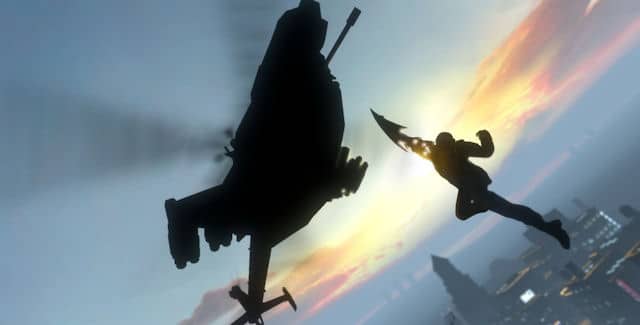
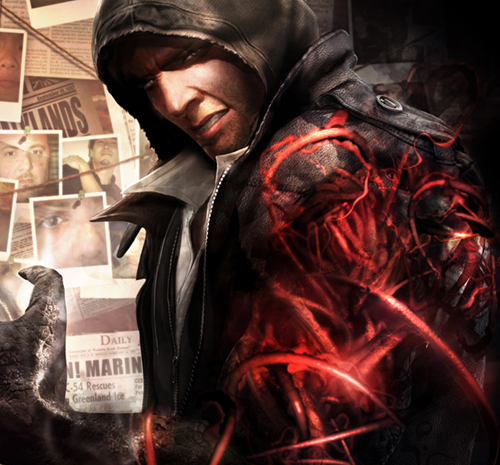
Prototype Games Wallpaper

Prototype Games Wallpaper Biography
There are at least six bands by the name of Prototype:
1) Prototype is a progressive metal/thrash metal band, with at least two of its members from Los Angeles.
In 1994, Kragen Lum (guitar) and Vince Levalois (vocals, guitar) left the LA band "Psychosis", and decided to form a new band, Prototype.
They found a new drummer (Damion Ramirez) and bassist (Steve Gambina), and began recording new compositions of their critically acclaimed "Seed" demo under the name Prototype. The cassette contained only three songs, "Seed", "Shine" and "Dead Of Jericho". All three tracks later appeared on two more of their CDs. Critics worldwide praised the demo and even referred to it as a benchmark for today's progressive metal.
In 1997, Lum, Levalois, new drummer Pat Magrath (now a permanent member of the group) and new basist Mike Bear recorded their next CD as Prototype - "Cloned".
In 1999, the band found a new bassist, Kirk Scherer.
However, in 2002, Pat Magrath left the band, the band has still not appointed a replacement drummer. In 2002 the band appeared on "Phantom Lords - A Tribute to Metallica" covering Metallica's song "Battery".
In 2003, five songs from their album Trinity were featured on the soundtrack for the game True Crime: Streets of LA.
In 2004, an instrumental version of the song "Probe" was featured on the MTX Mototrax video game.
In 2006, the song "Synthespian", featured on Continuum appeared on Tony Hawk's Downhill Jam for Nintendo's Wii gaming platform.
On the band's latest CD "Continuum", original drummer Damion Ramirez handled the drumming with Pat Magrath guesting on one track. The song "The Way it Ends", off Continuum, is featured in the video game Guitar Hero III: Legends of Rock. It is considered one of the more difficult songs in the game.
Kragen, Vince and Kirk were endorsed by Jackson Guitars for two years and appeared in the product catalogs. Kragen's custom seven string Soloist was featured in the catalog's custom shop guitars.
Prototype Games Wallpaper
Prototype Game Wallpaper
Prototype Games Wallpaper
Alex Theme - [PROTOTYPE] Soundtrack

Games Wallpaper For Desktop

Games Wallpaper For Desktop Biography
Bliss is the name of a Windows bitmap developed by Stephane Couture & Marc-Antoine Tanguay. This image is included with Microsoft Windows XP, produced from a photograph of a landscape in Sonoma County, California, southeast of Sonoma Valley near the site of the old Clover Stornetta Inc. Dairy.[1] The image contains rolling green hills and a blue sky with cumulus and cirrus clouds. The image is used as the default computer wallpaper for the Luna theme of Windows XP. In the Danish version of Windows XP, the wallpaper is named Ireland, despite the image being taken in California.[2]
The photograph was taken by professional photographer Charles O'Rear,[1][3] a resident of St. Helena, Napa County, for digital-design company HighTurn. According to O'Rear, the photograph was not digitally enhanced or manipulated in any way.[4]
O'Rear has also taken photographs for Bill Gates's private Seattle stock photography company Corbis and Napa Valley photographs for the May 1979 National Geographic article "Napa, Valley of the Vine". Although O'Rear's focus was on photographing winemaking in the Napa Valley, the hill in Bliss didn't have grapevines when the photograph was taken in 1996, five years before the release of Windows XP. The photograph was taken on the side of the highway 12/121[map 1] by a hand held medium-format camera. The approximate location is 3101 Fremont Dr. (Sonoma Hwy.), Sonoma, CA. The coordinates for the hill are 38.250124,-122.410817.
O'Rear's photograph inspired Windows XP's $200 million advertising campaign "Yes you can", by the San Francisco division of New York City advertising company McCann-Erickson. The campaign was launched on television on ABC (America) during one of ABC Sports's Monday Night Football games of the 2001 NFL season. The television commercials included Madonna's Ray of Light song, whose TV rights cost Microsoft about $14 million.[5][6][7][8]
In November 2006, artist collaboration Goldin+Senneby visited the site in Sonoma Valley where the Bliss image was taken, re-photographing the same view ten years later. Their work After Microsoft[9] was first shown in the exhibition "Paris was Yesterday" at the gallery La Vitrine in April 2007.[10] and has later been exhibited at Galeria Vermelho, São Paulo,[citation needed] and 300m3 in Gothenburg.
Games Wallpaper For Desktop
High Resolution Desktop Game Wallpapers Free
Games Wallpaper For Desktop
ReCon Gaming Desktop Wallpapers Volume.3

Nfs Games Wallpapers

Nfs Games Wallpapers Biography
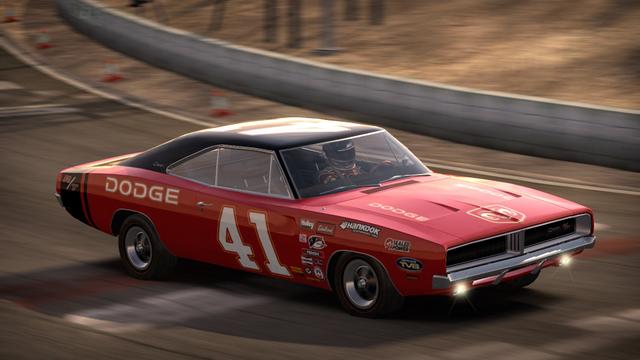
Need for Speed (NFS) is a series of racing video games published by Electronic Arts (EA) and developed by several studios including Canadian-based company EA Black Box and British-based Criterion Games. It was originally developed by the Canadian-based company Distinctive Software, which became known as EA Canada.
The series released its first title, The Need for Speed in 1994. Initially, Need for Speed was exclusive to the fifth generation video game consoles, eventually featuring in all seventh generation consoles by 2008. The titles consist of racing with different cars on various tracks, with some titles including police pursuits in races. Since Need for Speed: Underground, the series has integrated car body customization into gameplay.
Need for Speed is the most successful racing video game series in the world, and one of the most successful video game franchises of all time. As of October 2009, over 100 million copies of games in the Need for Speed series have been sold.
Nfs Games Wallpapers
Need For Speed Hot Pursuit Game Download
Nfs Games Wallpapers
Need For Speed History (1994 - 2010) Part 1

Game Wallpaper Download

Game Wallpaper Download Biography
Wallpaper is a kind of material used to cover and decorate the interior walls of homes, offices, and other buildings; it is one aspect of interior decoration. It is usually sold in rolls and is put onto a wall using wallpaper paste. Wallpapers can come plain (so that it can be painted), textured (such as Anaglypta), or with patterned graphics.
Wallpaper printing techniques include surface printing, gravure printing, silk screen-printing, rotary printing, and digital printing. Mathematically speaking, there are seventeen basic patterns, described as wallpaper groups, that can be used to tile an infinite plane. All manufactured wallpaper patterns are based on these groups. A single pattern can be issued in several different colorways.England and France were leaders in European wallpaper manufacturing. Among the earliest known samples is one found on a wall from England and is printed on the back of a London proclamation of 1509. It became very popular in England following Henry VIII's excommunication from the Catholic Church - English aristocrats had always imported tapestries from Flanders and Arras, but Henry VIII's split with the Catholic Church had resulted in a fall in trade with Europe. Without any tapestry manufacturers in England, English gentry and aristocracy alike turned to wallpaper.
During the Protectorate under Oliver Cromwell, the manufacture of wallpaper, seen as a frivolous item by the Puritan government, was halted. Following the Restoration of Charles II, wealthy people across England began demanding wallpaper again - Cromwell's regime had imposed a boring culture on people, and following his death, wealthy people began purchasing comfortable domestic items which had been banned under the Puritan state. In 1712, during the reign of Queen Anne, a wallpaper tax was introduced which was not abolished until 1836. By the mid-eighteenth century, Britain was the leading wallpaper manufacturer in Europe, exporting vast quantities to Europe in addition to selling on the middle-class British market. However this trade was seriously disrupted in 1755 by the Seven Years War and later the Napoleonic Wars, and by a heavy level of duty on imports to France.
In 1748 the British Ambassador to Paris decorated his salon with blue flock wallpaper, which then became very fashionable there. In the 1760s the French manufacturer Jean-Baptiste Réveillon hired designers working in silk and tapestry to produce some of the most subtle and luxurious wallpaper ever made. His sky blue wallpaper with fleurs-de-lys was used in 1783 on the first balloons by the Montgolfier brothers. The landscape painter Jean-Baptiste Pillement discovered in 1763 a method to use fast colours. Towards the end of the century the fashion for scenic wallpaper revived in both England and France, leading to some enormous panoramas, like the 1804 20 strip wide Panorama, designed by the artist Jean-Gabriel Charvet for the French Manufacture Joseph Dufour et Cie showing the Voyages of Captain Cook. One of this famous so called "papier peint" wallpaper is still in situ in Ham House, Peabody Massachusetts. Beside Joseph Dufour et Cie other French manufacturers of panoramic scenic and trompe l'œil wallpapers, Zuber et Cie and Arthur et Robert exported their product across Europe and North America. Zuber et Cie's c. 1834 design Views of North America is installed in the Diplomatic Reception Room of the White House. Like most of eighteenth century wallpapers, this was designed to be hung above a dado.
Game Wallpaper Download
HD Game Wallpapers [ 1920x1080 ]
Game Wallpaper Download
New IPhone Game Is FREE Today - Plus Wallpaper Download Link!

Wallpaper Of Games

Wallpaper Of Games Biography
Wilson footballs await packaging at the Wilson Sporting Good dedicated football factory in Ada, Ohio Jan. 25. Wilson Sporting Goods will ship 108 footballs to each team for Super Bowl XLVI. (REUTERS/Matt Sullivan)
Who is the "The Duke?" It's a simple question, one that every player for the New England Patriots and New York Giants will ask when they see the Super Bowl XLVI footballs.
The balls, made by Wilson in Ada, Ohio, by hand (as explained in the video below), are embossed with the XLVI logo, NFL commissioner Roger Gooddell's signature and the curious title, "The Duke." The NFL's footballs have actually carried the name "The Duke" since 2006, a not-so subtle return to the official ball after the title was retired in 1969 in the NFL-AFL merger.
The modern player wouldn't likely know that "The Duke" was former New York Giants owner Wellington Mara, father of current Giants owner John Mara. Wellington Mara was given the nickname "The Duke" when he was child growing up by New York Giants players. His father, Tim Mara, was the owner of the G-men then
When Wellington Mara was co-owner of the Giants with his brother Jack, he helped spearhead the deal with Wilson Sporting Goods to become the official sponsor of the NFL's footballs. Then Chicago Bears owner George Halas, who worked with Wellington Mara on the deal, suggested the balls be named "The Duke."
From 1941 to 1969, the NFL's official football carried the title "The Duke," but the football was redesigned after the merger. In 2006, the NFL brought back "The Duke" after Wellington died.
Other fun facts about the football:
- Wilson's factory in Ada, Ohio is the only place in the world that creates the NFL's footballs.
- Each Super Bowl team receives 108 game balls, with 54 being for practice and the other 54 for the game.
- There are 120 balls used for the Super Bowl, including 12 for kickers.
Wallpaper Of Games
Wallpaper Of Games
Wallpaper Of Games
Wallpaper Of Games
Wallpaper Of Games
Wallpaper Of Games
Wallpaper Of Games
Wallpaper Of Games
Wallpaper Of Games
Wallpaper Of My Games
Wallpaper Of Games
The Hunger Games Live Wallpaper